
Real Models - The story behind our approach to mentoring
Written by Michael Orcher
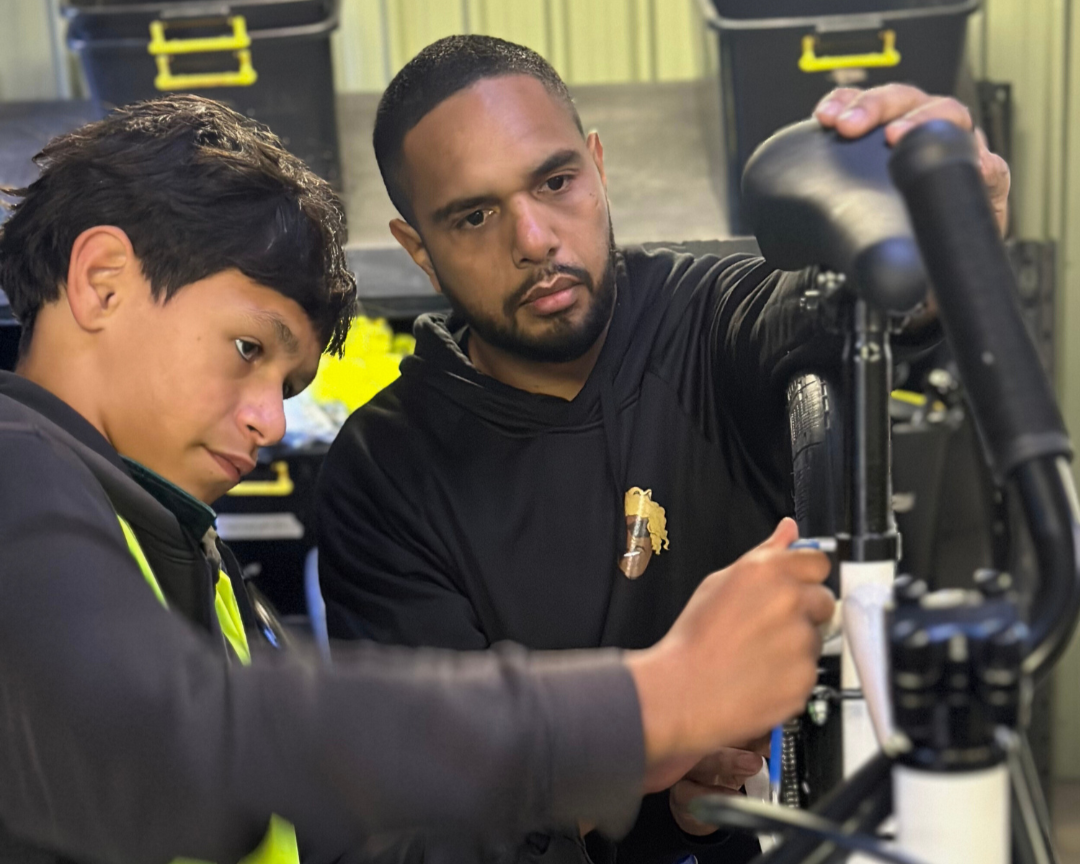
Michael Orcher, a Real Model in TRACTION programs & beyond.
The phrase “Real Models” came from my brother, best friend, and creative partner Junior Finau. Junior was so much more than a colleague. He was a master trainer and elite mentor who worked across Youth Justice, YMCA, high schools, First Five Forever playgroups – you name it. On top of that, he was an incredible musician, singer, songwriter, and above all else, a devoted husband and father. Junior didn’t just talk about being a role model, he lived it. He was the embodiment of what we now call a Real Model.
Before his passing, we started recording our own Real Models podcast. It was our way of giving voice to what we believed in – mentorship that comes from being real, not perfect.
You see, the term Real Model came from a place of deep reflection and honesty. We wanted to move away from the idea of being a “Role Model,” which to us felt more like playing a part. Roles can be performed, put on, taken off. They can create unrealistic standards of perfection, of always doing things “right.” And in the process, they can build walls between people, especially between adults and young people.
Real Models, on the other hand, are grounded in imperfection. We mess up. We stumble. But we also learn, grow, and keep showing up. That’s what makes us relatable. That’s what makes us human. And for young people navigating their own journeys, that’s what makes us accessible.
This idea fits naturally with my work at TRACTION. Many of us who mentor young people here didn’t take the straightest path. We come from all walks of life – different cultural backgrounds, families, environments, and experiences. We’ve each faced our own challenges. But it’s through those trials, and the lessons we’ve learned along the way, that we’re able to connect. We don’t show up as “experts” – we show up as equals. We’re not here to dictate, we’re here to walk alongside.
To me, that’s the power of a Real Model. You’re not placed on a pedestal or given a title by others. It comes from within. It’s about celebrating the fact that you’ve overcome adversity, and embracing the truth that you’ll continue to face challenges and continue to grow.
Young people respond to that. As my mother, Esther Orcher, used to say: “After age 11 or 12, your biggest influence is your peers.” They want real. They want truth. They want someone who’s lived it – all of it: the good, the bad, the ugly – and is still standing. Real Models can be trusted with the hard conversations. They can hold space without judgment. And because of that, they can make a real difference.
Growing up, I was surrounded by Real Models – my parents, grandparents, aunties, uncles, cousins, siblings. But my mum and dad were especially powerful examples. They weren’t perfect, but they showed up with grace, consistency, and gratitude. They never let obstacles break them down in front of us. Instead, they taught us how to face things head-on, how to bounce back, and how to carry ourselves with pride.
That’s what I try to bring to TRACTION. I show up with honesty. I’m open about where I’ve been, where I’m at, and even what I’m still working on. In our team check-ins, if I’m having a rough day, I’ll say it. But I’ll also share what I’m doing to get through it. That vulnerability sets the tone. As Junior used to say, young people “observe, imitate, and rehearse.” If they see us dealing with life, they’ll model that in their own way.
Real Models are vulnerable, consistent, accountable. But more than anything, they’re accessible. That means being available and open to having hard conversations. It means being transparent, not just about the past, but about the present too.
One of the first times I witnessed the Real Model approach at TRACTION was on my trial day. I watched Ben lead the OAR/BED activity, and he shared his own personal experiences that tied in with the theme. The young people leaned in, asked more questions, and connected deeply with his honesty. They saw someone who had lived through challenges and was still pushing forward. That moment was powerful – it showed them that their current situation isn’t permanent, and that transformation is always possible.
That’s what Real Models do. We create space. We build trust. And we remind young people that no matter where they’re starting from, they’re never alone on the journey.
I have been fortunate to live in the Real Model way for the majority of my life even before having context and a title to it given and learnt from Junior.
Most of my life, I’ve been lucky to be surrounded by real role models. Though, I didn’t fully recognise it until Junior helped me see what being a “real model” truly means. That shared knowledge made me realise how many of the guiding influences in my life had always been raw, honest, and authentically themselves.
Even more so I’ve been honoured to spread awareness and ignite others into the mentality or lifestyle of Real Modelling. From my work at Gunya Meta and TRACTION, to our (Junior and I) communities and families. I’ve always been and always will be an ambassador and advocate for the ‘Real Model’ way and continue to share the legacy of my brother Junior Finau.