
Why the transition to high school matters more than we think, and how to get it right
Think back to the first time you walked through the gates of high school…
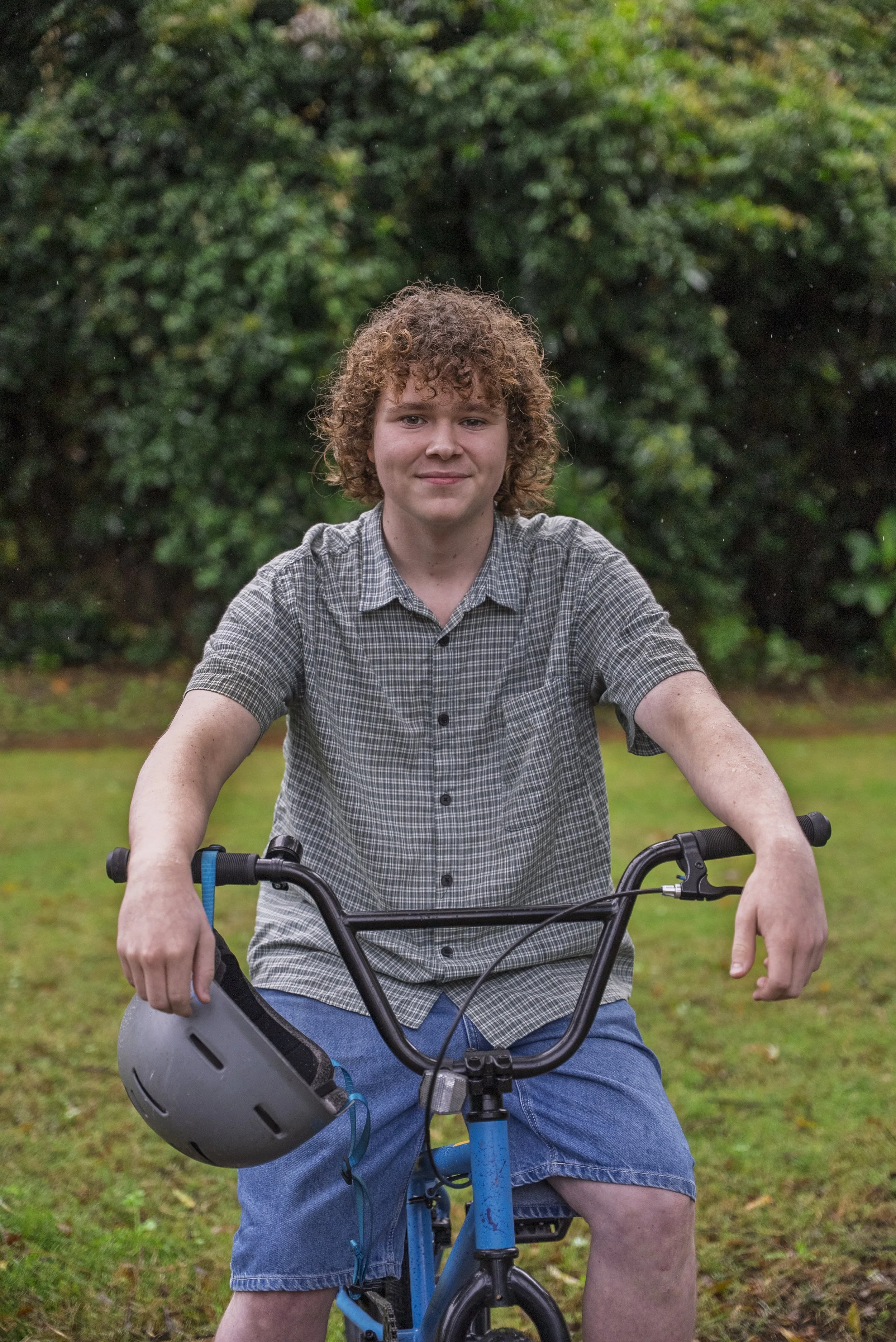
Maybe you remember the oversized backpack, the knot in your stomach, or the sudden feeling that everything ahead like friendships, expectations - even the school grounds themselves - had grown overnight. The fear of getting lost. The pressure to fit in. The worry about whether you’d be good enough in this new world.
For young people today that moment hasn’t changed, but the stakes have.
The transition from primary to secondary school is proven to be one of the most significant developmental milestones in a young person’s life. It’s a time of rapid change socially, emotionally, physically and academically.
TRACTION’s Founder, Sandy Murdoch, reminds us that this transition, and the challenges that come with it, affect every child in our community - regardless of postcode, background or ability.
“When the transition goes well, it lays the groundwork for confident, engaged members of our communities,” says Murdoch. “But when it doesn’t go well, the ripple effects can last for years. And this should matter to all of us, not just parents, educators or policymakers.”
The Mitchell Institute estimates that early school disengagement costs Australia billions each year through lost productivity, poorer health outcomes and increased contact with the justice system (Lamb & Huo, 2017).
Getting the transition right, from years 5 and 6 through into year 7, is critical. Our frontline experience working alongside young people during this period is reinforced by data: too many kids are struggling right now.
What drives early disengagement during the transition to high school?
Research consistently shows that the move to high school is linked to increased anxiety, drops in engagement and a decline in students’ sense of belonging (Benner, 2011; Akos & Galassi, 2004).
These challenges aren’t random, they’re driven by a cluster of factors:
Fear of the unknown is often the first hurdle. Young people worry about getting lost in larger schools, being bullied by older students, or losing their friendship groups. Many are anxious about higher academic expectations and stricter rules. Many of these concerns remain for children even after 12 months at high school.
Confidence also plays a huge role. Research shows that low self-esteem during transition is a strong predictor of later school withdrawal (Rice et al., 2015).
A sense of safety and belonging is another key driver. When young people don’t feel known, supported or valued in their new environment, disengagement can quickly follow (Jindal-Snape & Foggie, 2008).
And finally, there’s relevance. If school doesn’t feel connected to a young person’s life, strengths or future, motivation drops. As one body of research puts it, disengagement often begins when students stop seeing school as “for people like me” (Eccles & Wigfield, 2002).
The scale of early disengagement in Queensland is sobering. Over the last decade we’ve continued to see an increased number of young people experiencing school disengagement.
The ‘Growing Up in Queensland 2024’ report from the Queensland Family and Child Commission (QFCC) reported that on average, disengagement may affect up to 71,000 of 10-14-year-olds. And two out of five young people report feeling worried about school and stressed about their future.
Waiting until things go wrong is the most expensive option
Australia invests heavily in remediation, like alternative schooling, justice responses, and crisis mental health services. But research constantly tells us the same thing: by the time young people are deeply disengaged, the damage is harder and more expensive to undo.
Early disengagement is strongly linked with later outcomes such as lower employment, poorer health outcomes, and increased contact with the justice system (Lamb & Huo, 2017). Once patterns of avoidance and low confidence are entrenched, intervention becomes more complex.
“If we want different outcomes for young people, we have to stop waiting until they fail before we act. Supporting young people early, before disengagement takes hold, isn’t just better for them, it’s better for our communities and our wider community support systems.
”
At TRACTION, we believe this is where policy, funding and practice must align. Investing in transition support isn’t a ‘nice-to-have’ - it’s a cost-effective strategy with long-term social returns for society.
What really helps young people transition to high school?
Here’s what the research (and young people themselves) agree on.
Across studies and settings, the same protective factors/themes show up again and again:
Strong relationships with trusted adults and peers
Structured transition programs that extend beyond orientation day
Explicit skill-building around confidence, help-seeking and coping
Opportunities to feel seen, heard and capable.
(Evangelou et al., 2008; Rice et al., 2015)
This is the foundation for our targeted program called IGNITE, where you’ll see these evidence-based principles in full throttle.
IGNITE: Our practical, scalable solution that’s working
IGNITE is our awesome early intervention program supporting young people through the emotional, social and practical challenges of transitioning to high school.
The targeted program for year 5 and 6 students is delivered through weekly two-hour activity-based sessions, over ten weeks. It combines structured check-ins, practical project-based learning and culturally-responsive mentoring.
“We focus on building resilience, strengthening peer relationships and creating a genuine sense of belonging, IGNITE is about harnessing strengths early and helping young people build the confidence to carry them forward.”
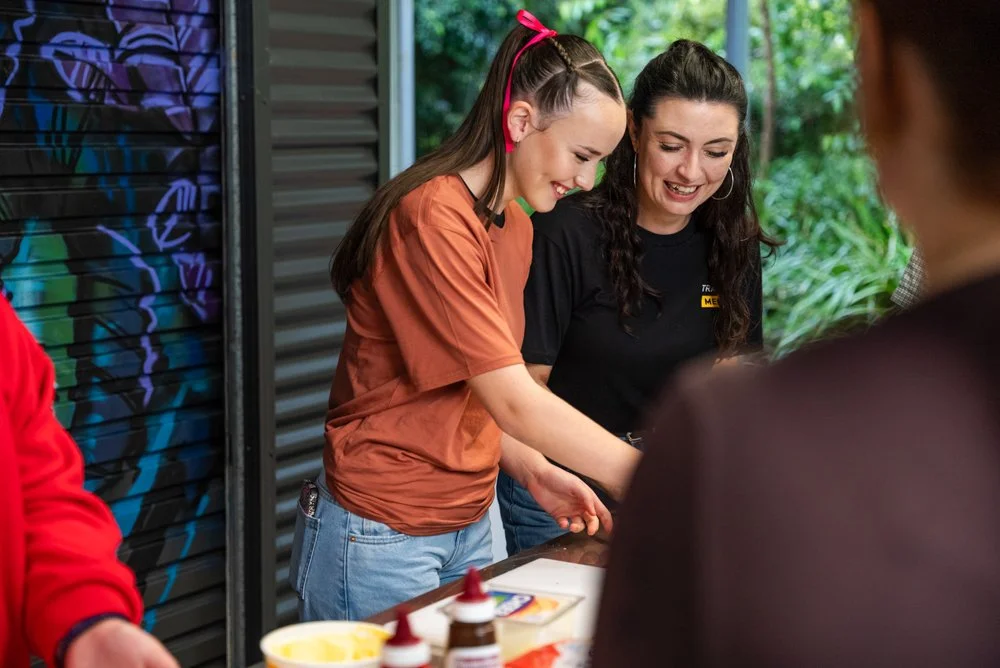
The unique program is not just a one-off workshop or a motivational talk, like other support programs out there. It’s a structured, relationship-based transition program designed to sit alongside school curriculums and community activities.
Crucially, IGNITE operates before disengagement escalates, making it a powerful example of prevention in action.
And the results are clear: participants report feeling more prepared, more connected and more capable of handling the step-change to high school.
Annabel also points out that a key practice underpinning TRACTION’s work is via ‘advantaged thinking’.
Rather than asking, “What’s wrong with this young person?”, advantaged thinking asks, “What strengths, relationships and opportunities already exist - and how can we build on them?” explains Annabel.
In practice, this means:
Seeing young people as capable, not ‘at risk’
Designing programs that amplify strengths rather than fix deficits
Creating environments where young people experience success early and often.
Research shows that when young people feel connected and experience success at school, engagement is more sustainable (Benner, 2011).
“We already know what works,” implores Annabel, “The challenge now is scale and commitment.”
If we all want better outcomes for young people in Australia, she outlines clear, actional steps for policy makers and educators alike;
Fund prevention, not just crisis response
Embed evidence-based transition support in all communities
Listen to young people’s lived experiences
Invest early - when it makes the biggest difference.
“High school will always be a big step in the lives of young people. But with the right supports in place, it can be a launchpad instead of a stumbling block.”
References
Akos, P., & Galassi, J. P. (2004). Middle and high school transitions as viewed by students, parents, and teachers. Professional School Counselling, 7(4), 212–221.
Benner, A. D. (2011). The transition to high school: Current knowledge, future directions. Educational Psychology Review, 23(3), 299–328.
Cauley, K. M., & Jovanovich, D. (2006). Developing an effective transition program for students entering middle school or high school. The Clearing House, 80(1), 15–25.
Eccles, J. S., & Wigfield, A. (2002). Motivational beliefs, values, and goals. Annual Review of Psychology, 53, 109–132.
Evangelou, M., Taggart, B., Sylva, K., Melhuish, E., Sammons, P., & Siraj-Blatchford, I. (2008). What makes a successful transition from primary to secondary school? Department for Children, Schools and Families.
Jindal-Snape, D., & Foggie, J. (2008). A holistic approach to primary–secondary transitions. Improving Schools, 11(1), 5–18.
Lamb, S., & Huo, S. (2017). Counting the costs of lost opportunity in Australian education. Mitchell Institute.
Rice, F., Frederickson, N., Shelton, K. H., McManus, C., Riglin, L., & Ng-Knight, T. (2015). Identifying factors that predict successful and difficult transitions to secondary school. Journal of Adolescence, 45, 587–599.
Topping, K. J. (2011). Primary–secondary transition: Differences between teachers' and children's perceptions. Improving Schools, 14(3), 268–285.
Queensland Family and Child Commission. (2024). Growing Up in Queensland 2024: A story of child and family wellbeing. (link to PDF)