

Influence & Policy
We work to strengthen the systems that keep young people connected to learning, purpose and opportunity.

Recent submissions
June 2026
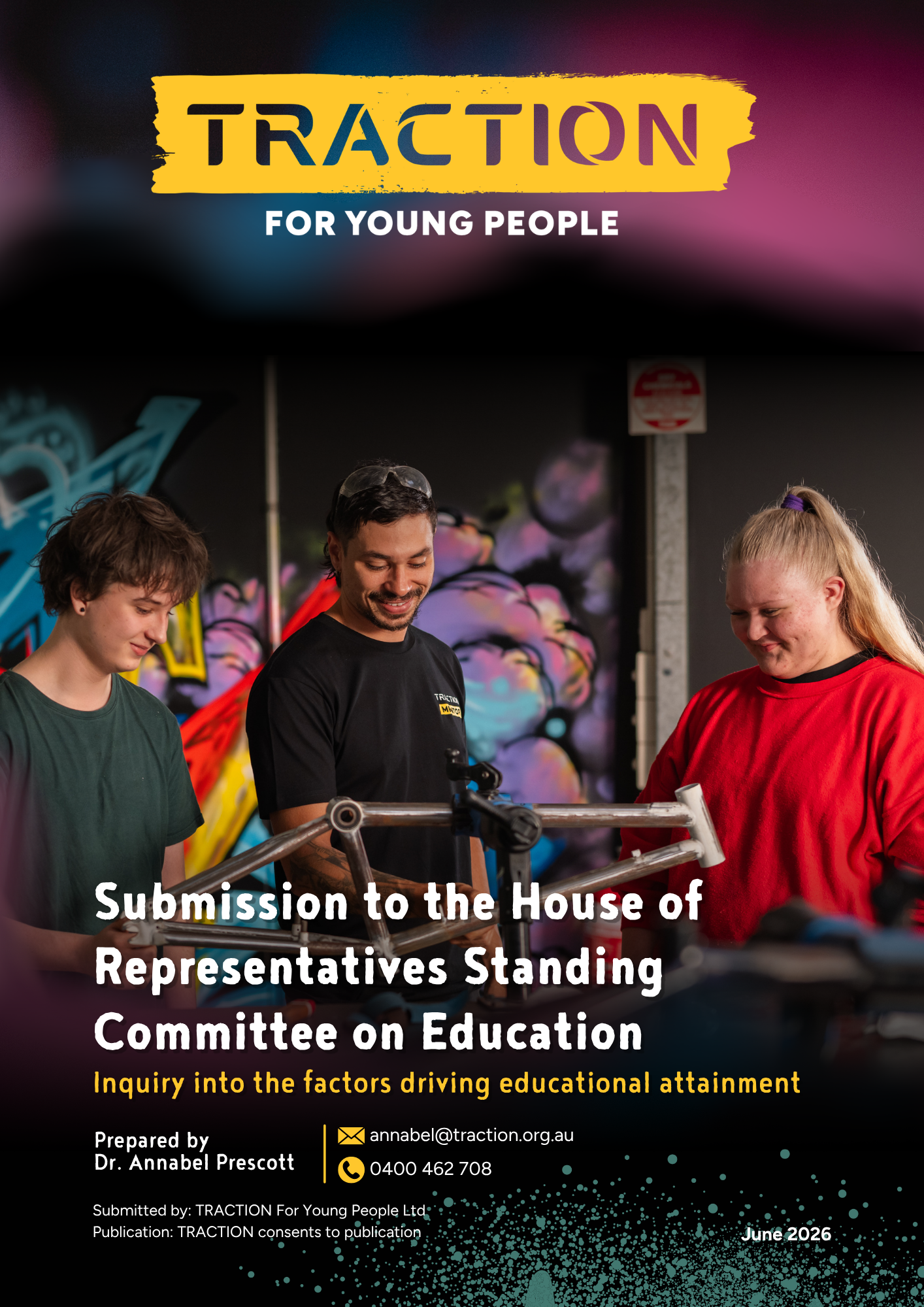
House of Representatives Standing Committee on Education
Inquiry into the factors driving educational attainment
We welcome the inquiry's focus on the transitions where young people are most at risk, and we support its recognition that wellbeing and engagement are central to learning. Our submission builds on this: attainment gaps in Australia are, to a substantial degree, engagement gaps, and engagement fractures well before a student stops attending, with a sharp cliff emerging between Years 7 and 9. Because schools cannot close these gaps alone, the evidence points to wraparound, relational, place-based supports delivered in partnership with schools and communities. We recommend a middle-years, whole-of-government engagement strategy spanning education, health and social services, funded community delivery partners embedded alongside schools, and broadening how we define and measure success beyond NAPLAN, so that engagement, wellbeing, belonging and successful transitions count as attainment in their own right.
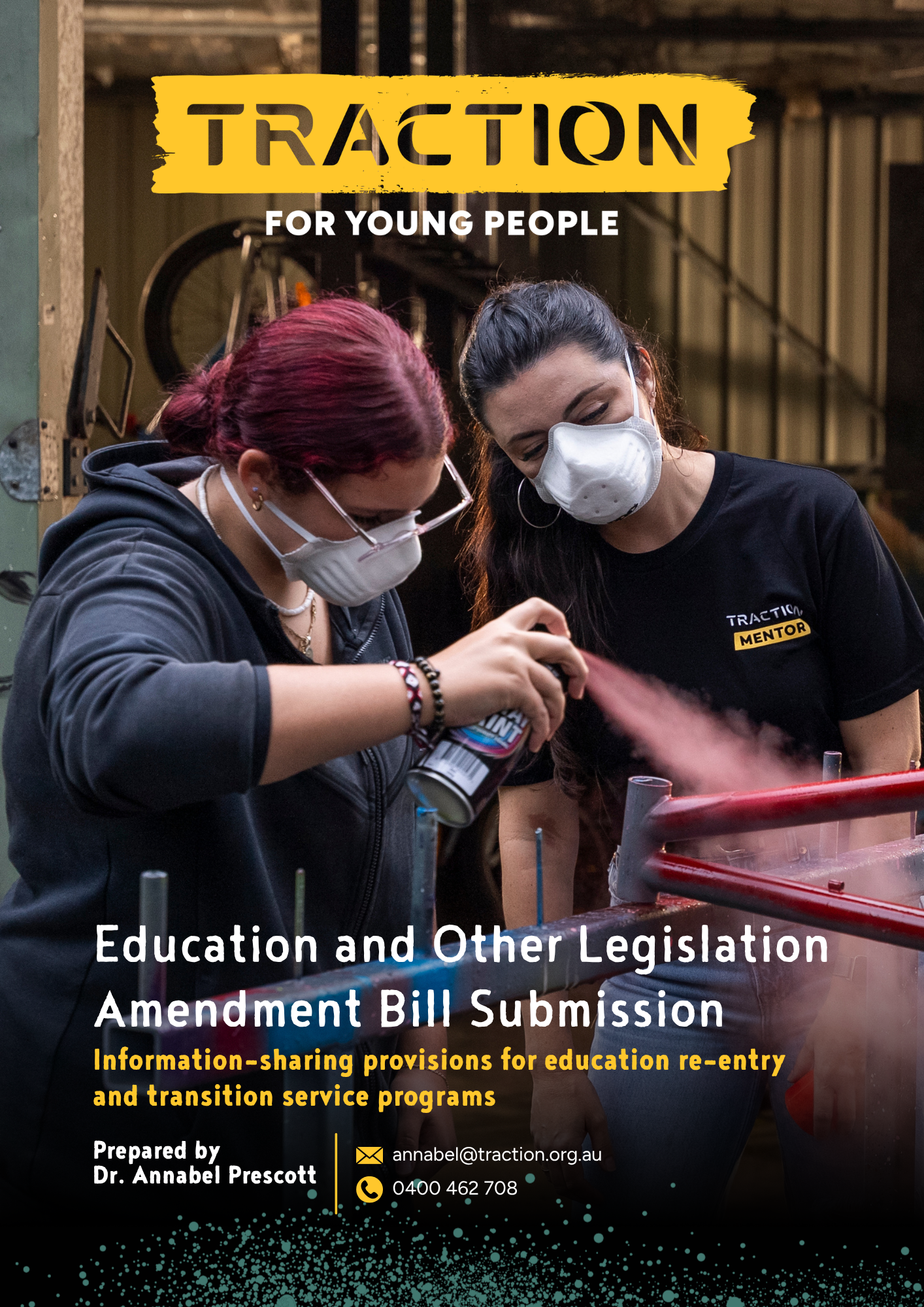
Education and Other Legislation Amendment Bill
Information-sharing provisions for education re-entry and transition service programs
We support the Bill's intent to create continuity of education for young people experiencing disengagement. Our submission proposes three strengthening amendments to the information-sharing provisions for re-entry and transition programs: independent assessment before referral, evidence of equitable in-school supports first, and consent as the operating principle. These additions align the Bill with Queensland's Better and Fairer Schools Agreement while delivering on its core purpose: young people experiencing disengagement deserve both a pathway back to learning and a system that proves it supported them equitably first.
Inquiry into Australia’s youth justice and incarceration system
We welcome the Inquiry's recognition that detention conditions alone cannot deliver lasting reform, and its openness to prevention as part of the solution. Building on this, our submission argues that youth justice contact is most accurately understood as the downstream outcome of cumulative system pressures, particularly gaps in early intervention, child protection, school engagement and trauma-informed support. The evidence is clear: children in youth justice overwhelmingly present with histories of trauma, child protection involvement and educational disengagement, and chronic absenteeism and exclusion are strong predictors of later court contact. Educational disengagement is not incidental; it is an early warning signal, and often a precursor to deeper system involvement. Encouragingly, Australia already possesses a national reform mechanism capable of supporting prevention through the Better and Fairer Schools Agreement (2025–2034): if strengthened to include accountability for Student Disciplinary Absences, nationally consistent early warning triggers, and structured school–community partnerships, it can function as a primary prevention strategy. Prevention is not an adjunct to youth justice reform; it is the foundation of it.