
Our Senate Inquiry submission: Why prevention must be at the centre of youth justice reform
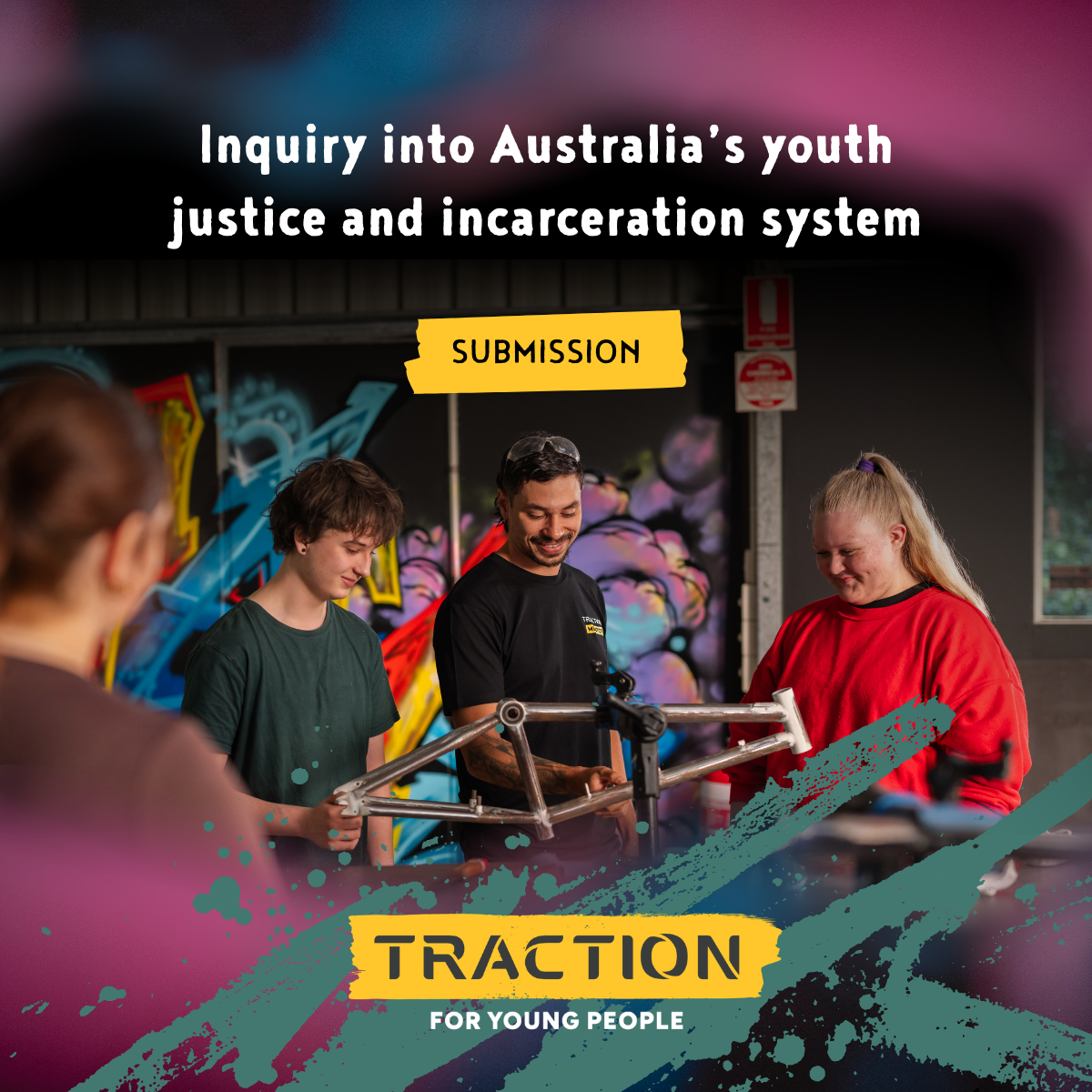
We recently submitted evidence to the Senate Inquiry into Australia’s Youth Justice and Incarceration System. Our message is simple: if Australia wants fewer young people in detention, we need to start paying attention much earlier - long before police, courts or detention centres become involved.
The early warning signs we’re missing
Research consistently shows that young people who end up in the justice system often share similar life experiences such as trauma, learning difficulties, unstable home environments or involvement with child protection.
But one of the clearest warning signs appears earlier than most people realise: educational disengagement.
When young people begin missing school regularly, feel disconnected from learning, or are suspended - it often signals something deeper and the start of a negative trajectory.
Studies show repeated suspension and school exclusion are among the strongest predictors of later justice system contact.
In our submission, we emphasised that educational disengagement should be recognised as both a national crisis and a human rights issue. When large numbers of young people are chronically absent, excluded or disconnected from learning, the right to education under Article 28 of the United Nations Convention on the Rights of the Child is not being realised.
TRACTION CEO Dr Annabel Prescott reminds us that disengagement is not simply an attendance or behavioural issue, but a systemic equity problem.
“It’s not the fault of young people – it’s a fault of the systems that surround them,” she said.
“Our submission was a great opportunity to remind the education sector, policy-makers and many other experts that addressing attendance without transforming relational, cultural and environmental conditions in schools will not reverse disengagement trajectories or prevent downstream system involvement.”
Solutions are available for us to do better
The Better and Fairer Schools Agreement (2025–2034) gives Australia a real opportunity to tackle this problem earlier, where it starts.
For the first time in many years, national school reform is focusing on what keeps young people engaged: fairness, wellbeing and stronger connections to learning.
The potential is for this to result in:
recognising chronic absence and suspension as early warning signs
responding with support rather than exclusion
strengthening partnerships between schools and community organisations
investing in mentoring and engagement programs like TRACTION during the middle years.
Ideally, detention for children should only be a last resort. But for this to be realised, prevention has to come first - something we strongly emphasised in our submission.
We also recommended that a defined portion of future youth justice funding be redirected toward prevention during the middle years of schooling - a critical developmental window.
Prevention works - and it costs a LOT less
Youth detention is one of the most expensive interventions governments fund. It costs hundreds of thousands of dollars each year to detain a single young person, yet long-term outcomes remain poor, with high rates of reoffending.
The long-term economic and social cost of school disengagement is even more alarming.
It’s estimated at over A$1.35 million per individual in lost earnings and increased public costs over a lifetime. Some analysts suggest the broader impact may be even higher - from A$18.8 billion in fiscal costs to A$50.5 billion in social costs.
By contrast, early intervention programs like TRACTION For Young People that keep young people connected to school and community are FAR less costly - and FAR more effective.
Programs like ours work with young people in the middle years of schooling, offering hands-on mentoring and practical learning experiences embedded within schools.
The goal isn’t punishment. It’s connection. When young people feel capable, supported and part of something positive, everything begins to change.
Students in TRACTION programs report increased confidence, improved behaviour regulation, stronger relationships with teachers and peers and better school engagement.
Sometimes the impact is captured in something as simple as a young person’s own words:
“TRACTION helped break me out of a bad habit of missing school. The more I missed, the harder school became. TRACTION helped me become more confident asking for help.”
Why the middle years matter most
Annabel reminds us the ages between 10 and 14 are one of the most important windows in a young person’s development.
“It’s when identity forms. It’s when friendships and belonging matter most. And it’s when patterns around school attendance and behaviour often start to shift and begin to fall through the cracks.”
Across Australia, around 10–12% of students become chronically disengaged in early secondary school, rising to roughly one in five by Year 10.
The impacts ripple outwards.
Yet when the right support shows up at the right time, trajectories can change.
A voice at the table
As part of our long term TRACTION strategy, we’re aligning with influential political and community groups helping shape the national conversation about young people.
“We’re honoured to have been invited to submit to the Senate Inquiry,” said Annabel.
“Our recommendations are based on a simple idea backed by the evidence: if youth justice involvement is the result of earlier system failures, then real reform has to focus on prevention, accountability and better coordination between systems.”
Surely this moment is an opportunity for public bodies, experts, schools and communities to step in and shift the dial.
For the sake of our young people.
Learn more about Australia’s youth disengagement crisis and how our programs are tackling this every day with measurable results.