
The myth of the ‘unmotivated dropout’: Why our assumptions are failing young Australians
By Dr. Annabel Prescott & Eleesa Johnstone
For years, one damaging myth has shaped how we talk about young people who leave school before Year 12: that they lack ambition, commitment, or the drive to succeed. It’s a myth reinforced in many staffrooms, living rooms and across Australia.
At TRACTION, we know first-hand that the truth is far more complex.
The fact is, young people are not leaving school because they’ve stopped dreaming about their future. In fact, recent research shows the exact opposite. A recent landmark study found that 92% of young people who disengaged during Year 11 still intended to complete Year 12 (The Smith Family, 2024). They didn’t walk away from learning. They simply walked away from environments that weren’t working for them.
We also need to acknowledge that career pathways are not always linear. Research shows that just because someone leaves high school early, it does not mean further learning, training and career pathways are suddenly blocked forever.
To genuinely support young people properly - we need to get the story straight.
What’s going on for young people?
National research paints a clear picture: Disengagement is typically driven by social, economic, wellbeing and contextual pressures, not low motivation or personal failings (Robinson & Meredith, 2013; Gossner et al., 2025; McMillan & Marks, 2003).

Many young people face:
Bullying or poor school relationships
Family responsibilities, including caring for siblings or contributing financially
Lack of access to mental-health support
Curriculum mismatch - learning that doesn’t feel relevant or achievable
Rigid processes, like inflexible timetables and attendance policies
Pressure to work, especially in low-income households
Transport barriers, instability, or poor access to support services - especially in smaller regions
Unmet learning support needs
Limited pathways for hands-on, practical, or interest-based learning.
For Aboriginal and Torres Strait Islander students, the picture is even more problematic when we layer on pressure from low cultural safety.
Many adults would struggle with these pressures. The fact is, when the environment becomes overwhelming, impractical, or unsafe, leaving school can feel like the only option.
Disengagement vs. School Refusal: A Crucial Distinction
A common misunderstanding is the difference between disengagement and school refusal.
School refusal is linked to intense emotional distress. These young people typically feel overwhelmed by anxiety, fear, or other psychological barriers. It is a wellbeing issue requiring targeted mental-health intervention (Parliamentary Library, 2022).
Disengagement, on the other hand, is a more practical or structural problem. It reflects a breakdown between the student and the system.
When we confuse the two, we risk:
Providing the wrong support
Misreading a young person’s needs
Blaming the student instead of understanding the context
Missing key opportunities for re-engagement.
Other dangers of mislabelling young people as ‘unmotivated’
Often young people will experience stigma and shame of being judged or labelled this way. They internalise the message that they are the problem, creating long-lasting damage to identity and confidence.
Schools often deploy ineffective interventions and behaviour management strategies that won’t acknowledge or fix underlying barriers.
All in all, students are pushed further away. Instead of feeling supported, they feel misunderstood and then disengage faster.
Leaving school early - reframed
Data from the Longitudinal Surveys of Australian Youth (LSAY) shows that around 75% of early school leavers re-engage with further education by age 25, most commonly through vocational training (Lim, 2022).
Findings like this dismantle the idea that disengagement equals failure. Instead, it can mark a transition into learning environments that better suit the individual.
TRACTION CEO, Annabel Prescott, reinforces this.
“In many cases, leaving school early can present a fresh, positive phase of life that opens up for the better. Young people should be offered opportunities for less traditional pathways that better reflect their lives, their challenges and their strengths”.
Re-engagement is possible when systems adapt
“We’re advocating for better systems, structures and strategies,” says Annabel. Young people openly and wisely reflect on their curriculum and wellbeing support in research conducted by Dr. Prescott. Young people desire highly relational, honest engagement with education and tailored wellbeing support that doesn’t comprise their future
“Young people deserve environments that adapt to them - not the other way around.”
External research, backed by our real-world TRACTION expertise, shows that re-engagement in learning succeeds when young people feel:
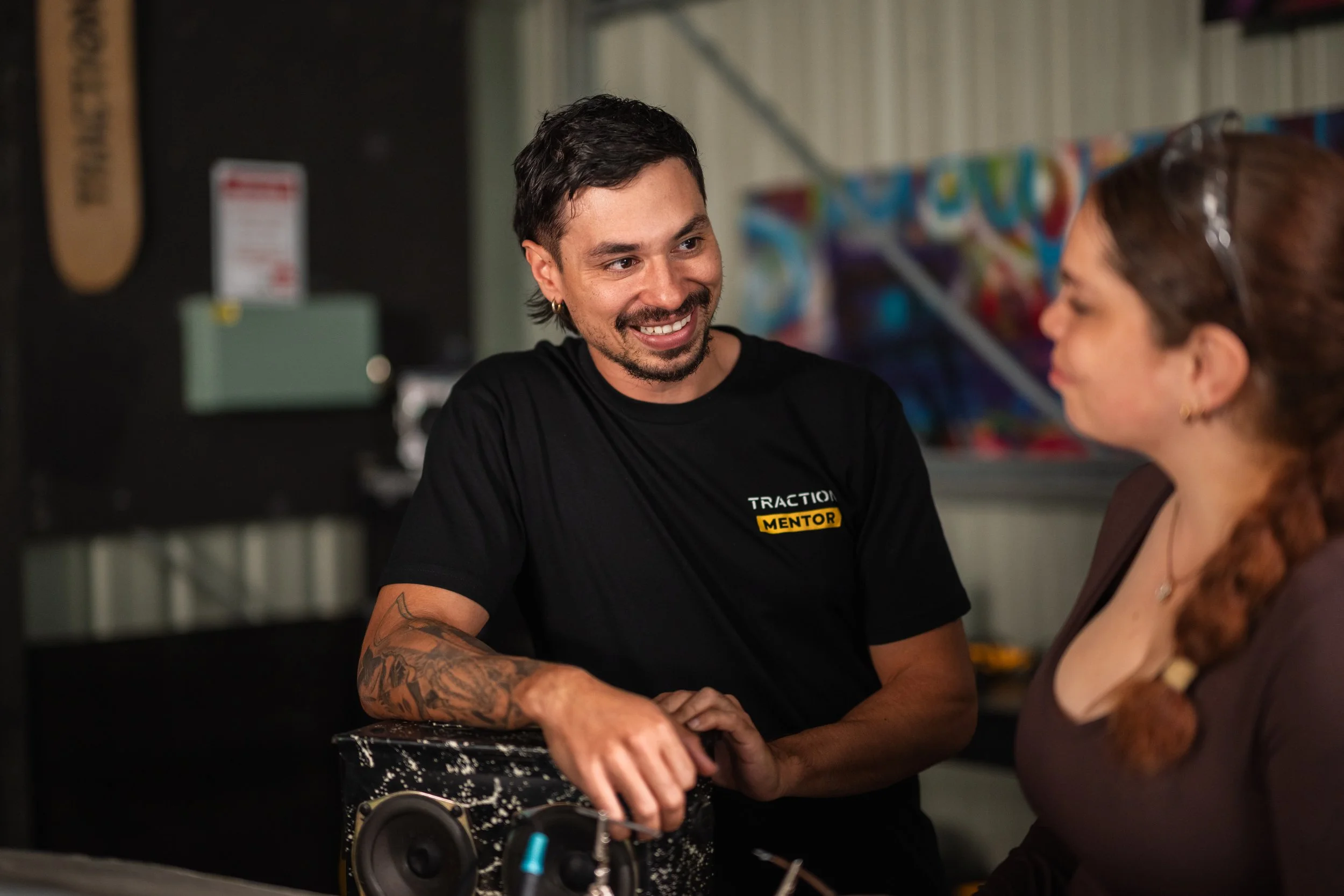
Heard
Safe
Seen as capable
Offered practical, hands-on learning
Given real-world purpose
Surrounded by supportive adults who believe in them.
Annabel and the TRACTION team are determined to dismantle traditional ways of thinking, and spark a new conversation – backed by real world evidence.
“We think it’s time for educational and societal systems to meet young people where they are, and understand why mentor programs like ours exist in the first place, and why they work so well,” implores Annabel.
“At the moment we see too much focus in programs being at the bottom of the hill and we need more support in programs like TRACTION earlier and with a focus on middle years of 10-14 year old. It’s time for wider, systematic change.”
Meeting young people where they are
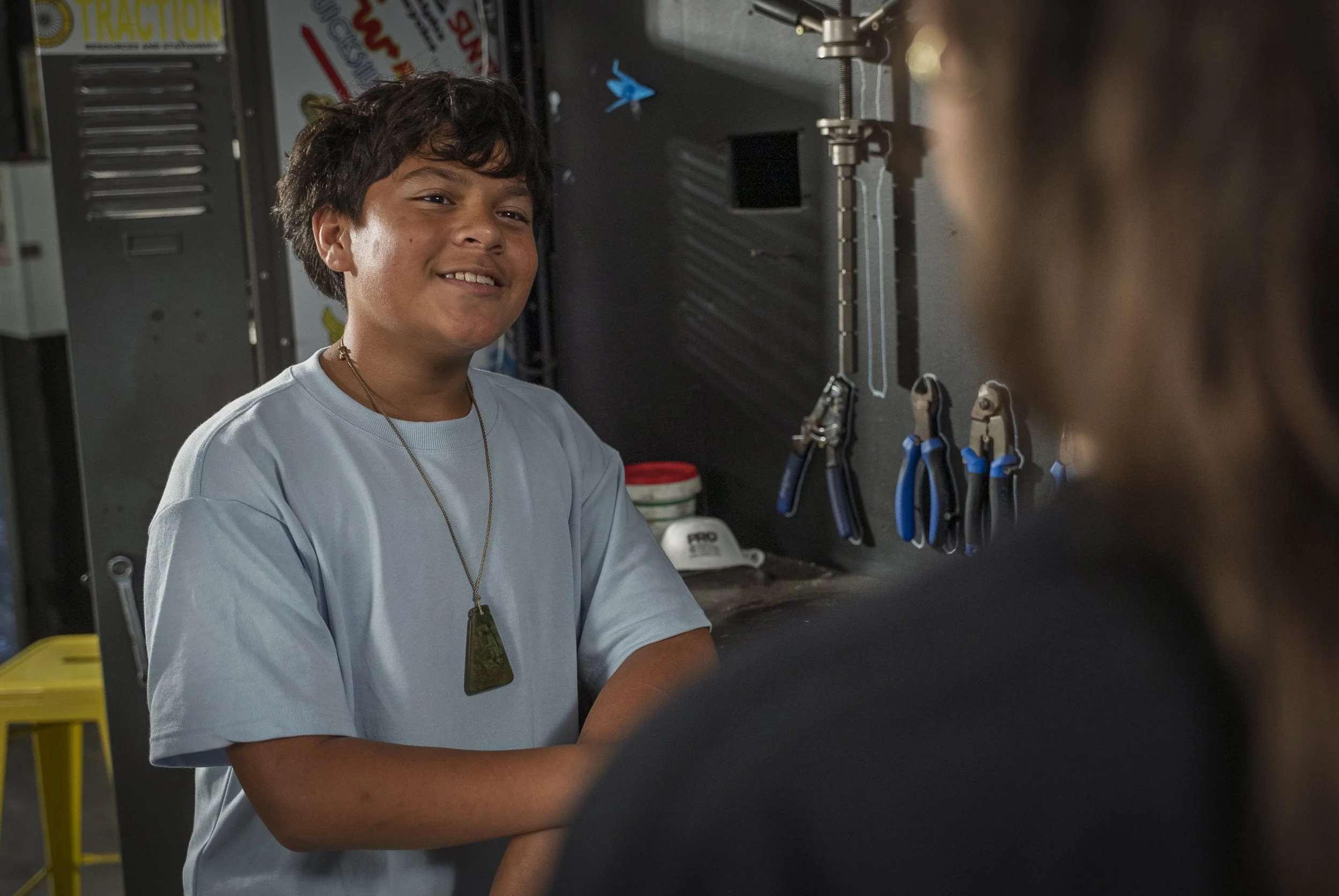
For more than a decade, TRACTION has been working alongside young people who feel disconnected from traditional schooling. Through practical learning experiences, working ‘on the tools’ and lead by our ‘Real Mentors’, participants rebuild confidence, motivation and identity.
TRACTION Founder, Sandy Murdoch, describes it this way:
“Over the last ten years at TRACTION, I’ve seen young people walk through our doors carrying the weight of feeling like they don’t fit the system. And then something shifts. When they’re listened to, when their strengths are recognised, when learning becomes practical and real - they light up. Many of our participants don’t leave education behind at all, they find new, meaningful pathways. Sometimes those pathways are immediate, sometimes they take time - but with the right support, they grow.”
The research is clear: if we want young people to be true to themselves and succeed, we must change how we think, how we respond and how our systems operate.
Young people haven’t given up … and neither should we.
References
Gossner, K., Jackson, C., & Lewthwaite, B. (2025). Community insights into school disengagement. Australian and International Journal of Rural Education.
Lim, P. (2022). VET as a re-engagement pathway for early school leavers. National Centre for Vocational Education Research.
McMillan, J., & Marks, G. N. (2003). School leavers in Australia: Profiles and pathways. Australian Council for Educational Research.
Parliamentary Library. (2022). School refusal and barriers to attendance in Australian schools. Parliament of Australia.
Robinson, E., & Meredith, V. (2013). Family factors in early school leaving. Child Family Community Australia (CFCA) Paper No. 16.
The Smith Family. (2024). Pathways, Engagement and Transitions (PET) study.
Prescott, A. (2020). Wasted Education: An exploratory study of the development and implementation of drug policy in secondary schools. Doctoral Thesis, University of Auckland.