
What the Edelman Trust Barometer is making me think about - as a for-purpose CEO
By Dr. Annabel Prescott, TRACTION CEO
I’ve been sitting with the latest Edelman Trust Barometer, and one theme keeps surfacing: insularity.
The Barometer tracks trust across business, government, media and NGOs. And this year’s findings should give us all pause.
It describes an ‘everyday world’ where people are increasingly reluctant to engage with those who are different, whether that be in values, beliefs, background or perspective. And trust is shifting away from institutions at an alarming rate and towards “people like me”.
We can all see the forces driving this.
But as a CEO for a not for profit organisation that supports young people, it lands heavily.
The role of NFPs in a low-trust world
Leading an NFP has always meant balancing strategy, growth and sustainability. Increasingly, it also means:
Holding trust across diverse stakeholders
Translating between sectors that don’t share a common language
Maintaining credibility as institutional trust declines
Scaling impact without diluting the relational core of the work.
That responsibility doesn’t start externally. It starts inside our organisations.
Culture becomes critical. Shared language, mutual understanding and relational awareness are not “nice to haves” - they are the infrastructure of organisational trust. Tools like CliftonStrengths really help, but the deeper shift is behavioural: choosing to listen, to stay open, and building empathetic communication.
This takes courage.
It also exposes a core tension. Growth pushes us towards systems, efficiency and replication. Trust is built through consistency, empathy and presence. Holding both is one of the defining leadership challenges of this moment.
What this means for young people
We still treat literacy and numeracy as the foundation of education. Or course they matter, but they’re no longer sufficient for the world young people are stepping into.
At TRACTION, we see more and more young people who don’t feel safe, seen or connected. Disengagement follows - academically, socially and often emotionally.
Our job exists to ignite the spark.
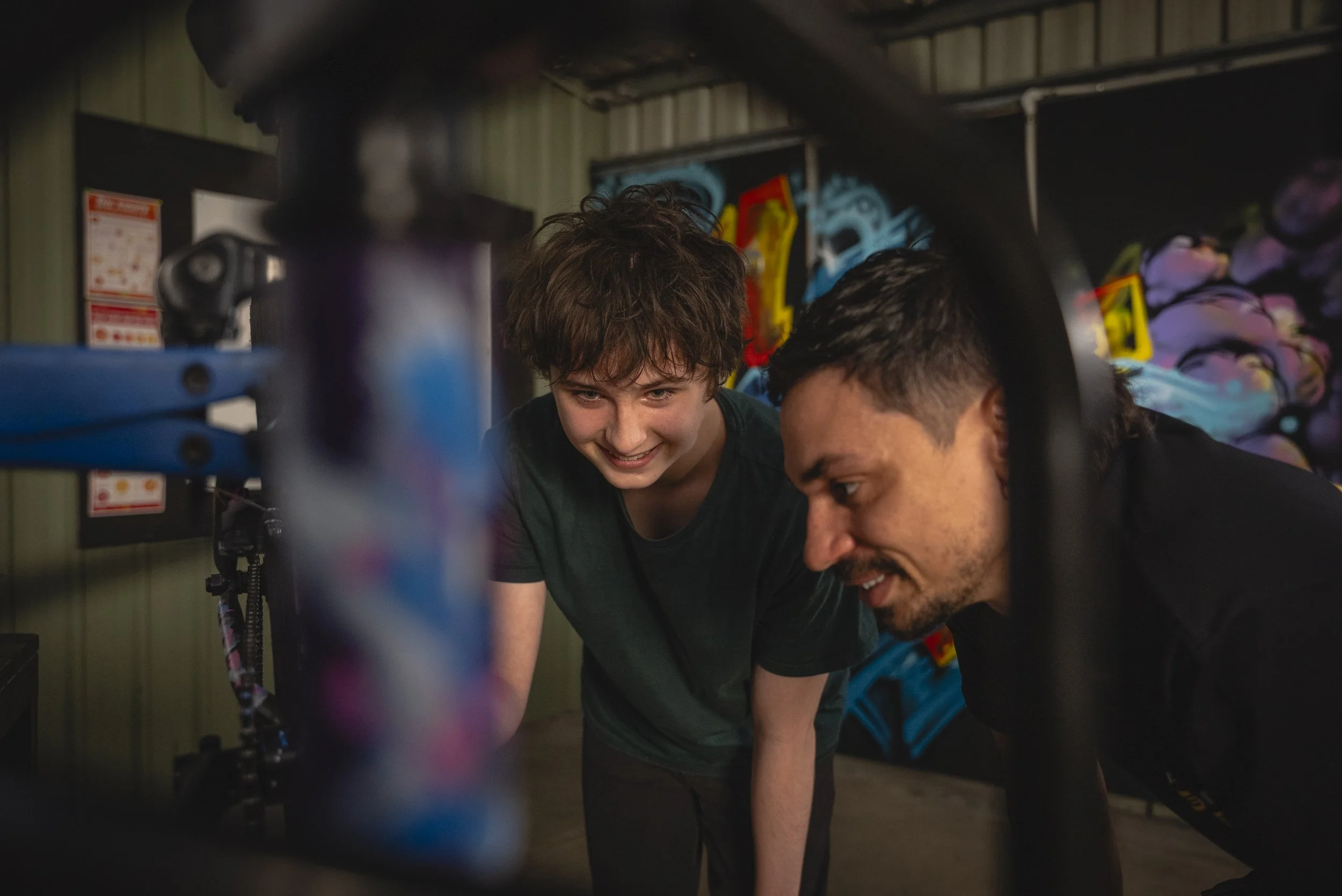
We see first-hand that young people need the skills to;
Build relationships with people different from them
Navigate competing perspectives
Develop a sense of identity and belonging
Maintain belief in a future that feels possible.
These are not ‘soft’ outcomes, they’re preconditions for participation and learning.
Frankly, if we ignore this, insularity in society should not surprise us.
Connection as a foundation
Now, this all comes back to a fundamental idea: what if we applied what we know about high-performing organisations more deliberately to education?
In any effective workplace, we design for psychological safety and feeling valued, shared language and understanding and building strong, trust-based relationships.
We do this because it drives performance.
Education should be no different. It is not just about transmitting knowledge, but shaping how young people relate - to others, to systems, and to themselves.
Connection is not an add-on to learning. It is what makes learning possible.
Becoming trust builders
At TRACTION, trust is built in the consistency of relationships, in young people feeling seen and respected, and in the small, repeated interactions that shape their experience of the world.
But - these are incremental steps. Insularity is bigger than any single organisation can tackle.
As service providers we play a critical role not just in supporting individuals, but in rebuilding trust between communities and the policies and systems that shape their lives.
The Edelman Trust Barometer signals a shift in what’s required:
For NGOs, it means stepping more consciously into the role of building trust. For leaders, it means holding the line between scale and people. For education, it means recognising that relational capability sits alongside literacy and numeracy as a core outcome.
If insularity is one of the defining challenges of our time, then connection and empathy must be among the outcomes we design for.