
Black Dog Institute research findings
What if the biggest factor in your child's mental health isn't counselling, curriculum, or class sizes - but whether they feel like they belong?
For years, schools, government and funders have invested heavily in programs, facilities and structural reforms to improve student wellbeing.
Yet a landmark Australian study suggests we may have been looking past something far more fundamental.
The Black Dog Institute's Future Proofing Study, one of the largest long-term studies of adolescent mental health ever conducted in Australia, has tracked more than 6,000 students across 130+ schools since 2019. Each year, those students have shared how they're really doing: their wellbeing, sleep, relationships and experience of school life.
The findings released in March 2026 are difficult to dismiss. Students who felt connected to their school in Year 8 went on to report significantly better mental health by Year 10. And the driver of that connection wasn't academic support, school size, or staffing ratios.
It was something far simpler, and far harder to fund: the quality of their relationships, and whether they felt like they belonged.
We think this should shift the way schools and local governments think about student wellbeing.
Too often, the focus is on what we can add - new programs, new facilities, new systems – and then we report against the numbers. But better questions might be: What does school actually feel like for this young person? Do they have positive, safe friendships? Is there an adult who notices when something’s off? Is there a better way to access external specialist help?
The findings back up well-established literature and research*. And it reflects what we see every day, that relationships aren’t a bonus in youth wellbeing - they’re the foundation.
“TRACTION has always known that young people thrive when they’re surrounded by consistent, caring relationships and have a genuine place to be themselves,” says TRACTION’s CEO, Annabel Prescott. “These findings reinforce that early intervention isn’t just about identifying risk. It’s about building authentic connection before disengagement takes hold.”
The scale of the challenge is significant. Around one in four students report low levels of connection at school. That’s a large group of young people moving through critical years without the protective mental buffer that a deep sense of belonging provides.
State governments have taken steps to address this issue, such as NSW. Here, public school students are invited to participate in a survey that reports on their personal experience of belonging at school – Tell Them From Me (TTFM). TTFM reports on student, parent and teacher perspectives, and provides data on students’ wellbeing and engagement.
The Queensland Government also asks important questions about belonging as part of ‘student engagement and wellbeing’ - through the Queensland Engagement and Wellbeing Survey and the Brighter Futures strategy.
But the fact is, schools shouldn’t have to do all of this alone. The Black Dog findings (and other research) makes a strong case for partnerships with community organisations. Surely the opportunity now is to connect government survey measurements more directly to funding, early intervention and community-based responses for students showing signs of disengagement?
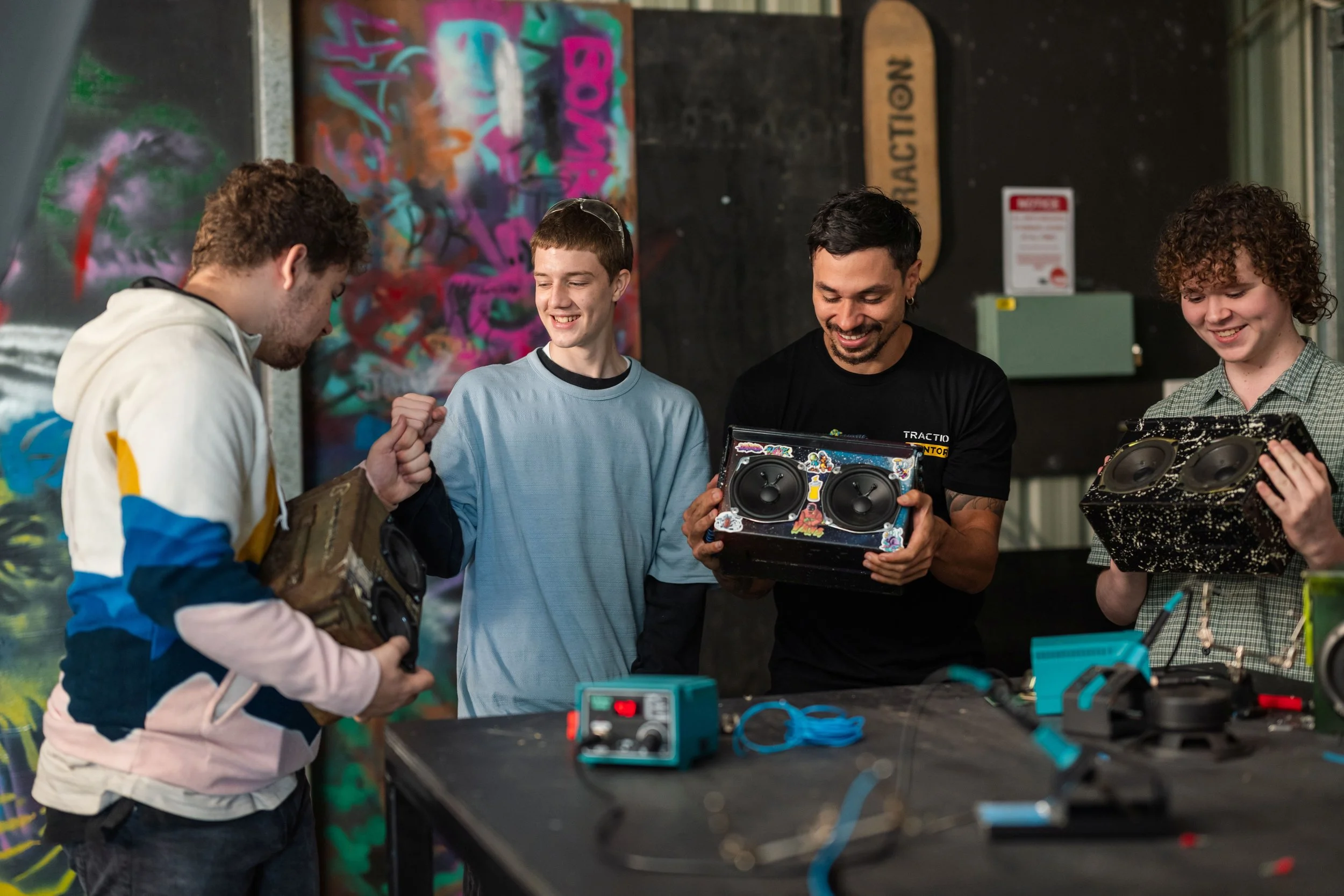
For students starting to drift, a qualified mentor, hands-on project and a safe space to belong, can help rebuild the bridge back to learning. Our TRACTION programs work with young people at various ages, helping them build confidence and reconnect with their future.
Through mentoring, practical projects (such as building bikes from scratch) and intentional peer connection, TRACTION creates an environment where young people can re-engage - with learning, with others and with themselves.
Many come in feeling disconnected or unsure where they fit. What they find isn’t a lecture or a one-size-fits-all solution. It’s practical work, supportive adults, achievable goals and a fun group where they can contribute and can find a greater sense of belonging.
“Young people often reconnect through doing, not just talking,” says TRACTION Head of Programs, Oscar Sullivan. “When they’re working on something real, alongside people who believe in them, they start to see themselves differently. That sense of capability and belonging can be a turning point.”
The Black Dog research highlights the importance of early intervention. It points to clear opportunities to support young people before challenges escalate, through stronger school connections, positive relationships at home, trauma-informed approaches and meaningful peer support.
The study also identifies other prevention priorities, including healthy sleep habits, positive family relationships, trauma-informed care, reducing problematic screen use, and strengthening connections at school.
Our approach at TRACTION aligns closely with what this evidence, and broader research, tells us matters. The urgent challenge now is to ensure funding, policy, and school partnerships reflect this evidence - so young people are connected earlier, with the right support, through trusted community partners.
*Further key research on the contributing factors to school disengagement:
Centre for Education Statistics and Evaluation (CESE), Understanding Attendance – A Review of the Drivers of School Attendance and Best Practice Approaches, (Sydney: NSW Department of Education, 2022).
Renner, H. M., Rowland, B., Hutchinson, D., & Toumbourou, J. W. (2023). Modeling Adolescent Social Inclusion to Improve School Completion. Journal of Youth and Adolescence.
Gossner, K., Jackson, C., & Lewthwaite, B. (2025). Community insights into school disengagement. Australian and International Journal of Rural Education.
Renner, H. M., Rowland, B., Hutchinson, D., & Toumbourou, J. W. (2023). Modeling Adolescent Social Inclusion to Improve School Completion. Journal of Youth and Adolescence.
The Smith Family. (2024). Pathways, Engagement and Transitions (PET) study.